

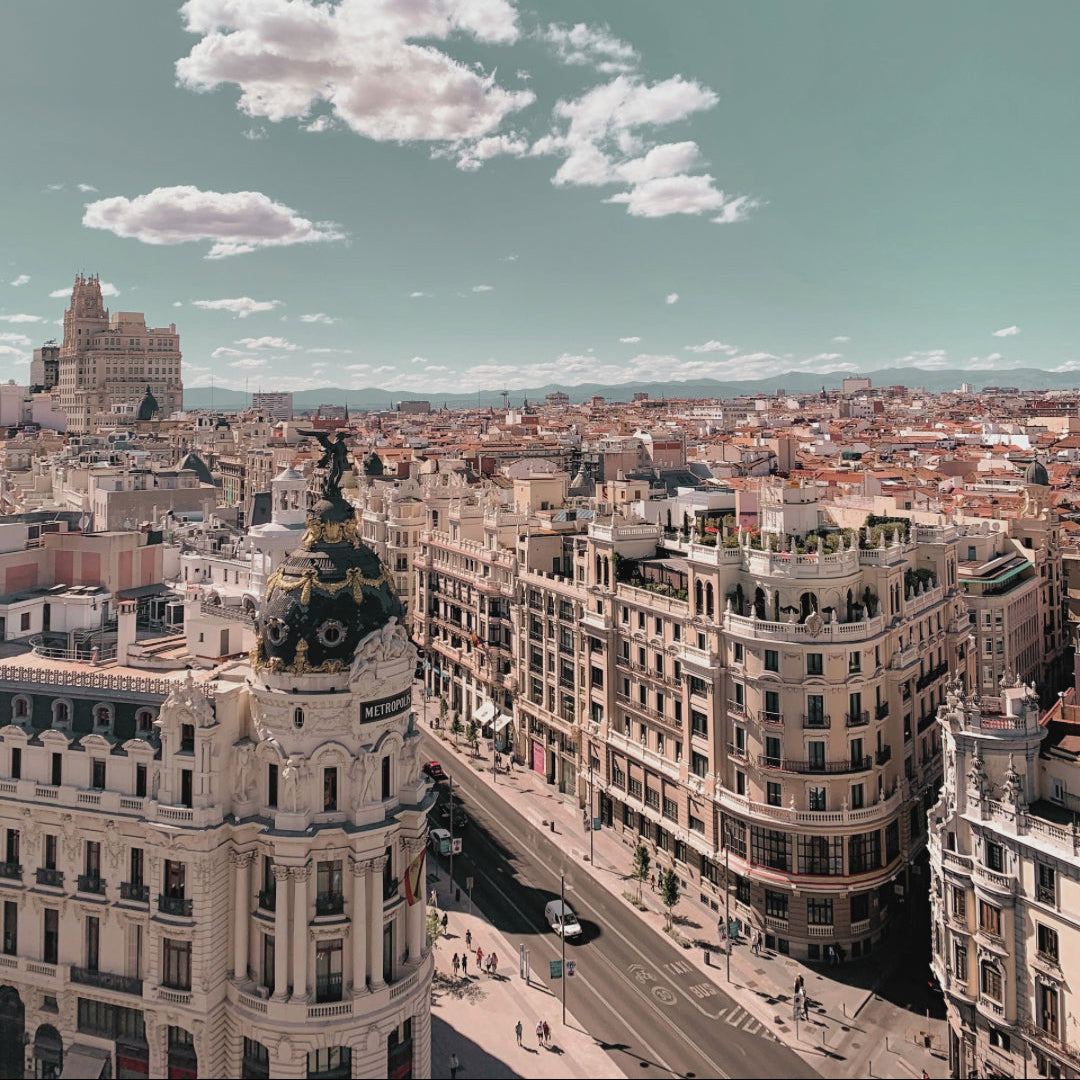
Madrid is not a city you can simply "take your dog along for the ride." It demands a different rhythm: head out early, consciously take it easy during the warm hours, and then venture out again in the evening when the streets cool down and life unfolds on terraces, in parks, and on the wide sidewalks.
But therein lies its charm. Madrid is not a classic "dogs allowed everywhere" travel destination. Museums, many historical interiors, and some restaurants remain reserved for people. However, the city offers something that is often more valuable on a trip with a dog: spacious parks, neighborhoods with authentic daily life, many terraces, and a culture that doesn't just take place behind closed doors.
With the right hotel choice, realistic daily planning, and an eye for quieter moments, Madrid becomes a very special city trip with a dog. Not because you check off as many sights as possible, but because you're out and about in the Retiro in the morning, consciously taking a break at midday, and walking together through the Barrio de las Letras or Salamanca in the evening.
This guide will show you which neighborhoods are suitable for a holiday with your dog in Madrid, which hotels genuinely communicate their rules transparently, where walks are feasible, and how to plan your Madrid trip so that your dog is not just present, but can enjoy the journey with you.
Table of Contents
- Why Madrid works for a dog-friendly holiday – and where the city has its limits
- The best neighborhoods for a dog-friendly holiday in Madrid
- Dog-friendly hotels in Madrid: What the pet policies really mean
- Walks and activities with your dog in Madrid
- Restaurants, cafés, and wineries with your dog in Madrid
- Travel planning for a dog-friendly holiday in Madrid
- Road trip and itinerary: Madrid, El Escorial, and Sierra de Guadarrama
- Conclusion: A dog-friendly holiday in Madrid
- Frequently Asked Questions
Key Highlights
- Madrid is particularly well-suited for small to medium-sized, city-savvy dogs, provided you plan your days around cool mornings, quiet midday periods, and long evenings.
- The best travel time for a dog-friendly holiday in Madrid is spring and early autumn. In summer, you should consistently avoid hot pavements and midday hours.
- Dogs are allowed in many parks in Madrid. However, outside designated off-leash areas, rules apply: in summer, dogs can only be off-leash in many parks between 8 PM and 10 AM; in winter, between 7 PM and 10 AM.
- The metro can be used with a dog, but only on a leash and with a muzzle, in the last carriage, and not during weekday rush hours.
- Perrisimo Dog Café near the Retiro is one of the most reliable places for a joint break, as it offers a dedicated menu for dogs and humans.
1. Why Madrid works for a dog-friendly holiday – and where the city has its limits
Madrid is not a city that aggressively markets its dog-friendliness. It seems more like a metropolis where dogs are increasingly becoming a natural part of daily life – as long as they are calmly managed, move safely in busy situations, and can share space with other guests. This is precisely what distinguishes Madrid from some coastal towns in Spain or cities like Copenhagen, Amsterdam, or Berlin: the possibilities are there, but they must be consciously utilized.
Madrid's greatest advantage lies in the combination of urban life and generous green spaces. The Retiro, Madrid Río, and Casa de Campo offer a balance to the narrow streets of the old town and the dense center around Sol or Gran Vía. If you live centrally, you can go for a long walk in the park in the morning, then have breakfast, return to the hotel at midday, and only head out into the city again in the evening. This is not a compromise, but the best way to experience Madrid with a dog.
Another advantage is the strong terrace culture. Madrid lives outdoors – for breakfast, aperitifs, and late dinners. This significantly eases travel with a dog, as you don't constantly have to search for indoor spaces where animals are allowed. Nevertheless, not every terrace is automatically dog-friendly, and indoors, establishments decide for themselves whether dogs are allowed. Madrid's official tourism organization therefore explicitly recommends asking about the rules before entering a café, restaurant, or shop.
The biggest limitation remains the heat. Madrid is inland, summer months are dry and warm, and the city noticeably retains heat. Asphalt, little wind in narrow streets, and crowded squares can become strenuous for dogs faster than the outside temperature might suggest. A dog that comfortably walks for several hours through a city at home might need shade, water, and a break after a short time in Madrid in July.
Madrid is therefore particularly well-suited for dogs who feel secure in urban situations: traffic, elevators, hotel lobbies, terraces, rolling suitcases, and changing noise levels are part of everyday life. For very noise-sensitive dogs, dogs with circulatory problems, or young dogs without city experience, mid-summer is not a good time to travel.
Madrid with a dog works particularly well if you:
- stay centrally and can do many things on foot,
- plan the midday as a conscious rest period at the hotel,
- have a calm, well-behaved, and city-savvy dog with you,
- use parks as a fixed part of the day, rather than just for quick potty breaks,
- choose fewer program items and allow more time for shared routines.
2. The best neighborhoods for a dog-friendly holiday in Madrid
For a dog-friendly holiday in Madrid, it's not crucial to stay as close as possible to every sight. Much more important is how quickly you can go for a good first walk in the morning, whether you can return to the hotel at midday without long distances, and how quiet the surroundings become in the evening. The right location changes the entire itinerary.
Retiro and Salamanca: The most elegant base for calm routines
The area around the Retiro and the Barrio de Salamanca is the most harmonious choice for many trips with dogs. The Retiro is centrally located and offers wide paths, shady areas, designated dog zones, and ample space for a longer morning walk. Especially before nine o'clock, the park feels significantly quieter than at midday. You're more likely to encounter joggers, people with their dogs, and residents than tour groups or school classes.
For the first walk, it's worth not going directly to the large lake or the most famous photo spots. The smaller paths on the edge of the park feel calmer, give your dog more opportunity to sniff, and avoid unnecessary stimuli. In Madrid, the quality of a walk doesn't depend on how many sights are on the route. It arises from peace, shade, and a pace that works for your dog.
Salamanca itself is more orderly, quieter, and less touristy than many neighborhoods in the immediate center. The streets are wider, the selection of high-quality hotels and cafés is greater, and after dinner, you don't have to walk back to the hotel through the dense crowds around Sol. For small dogs who have to process many stimuli faster, this is a clear advantage.
Barrio de las Letras and Cortes: Central, lively, and walkable
The Barrio de las Letras is particularly suitable for travelers who want to experience Madrid through its atmosphere. Literary history, small squares, historic facades, restaurants, and routes towards the Prado, Retiro, and Atocha are all close by. With a dog, the neighborhood is especially pleasant in the morning and late in the evening. During the day, individual streets can get crowded; for relaxed walks, you should therefore choose side streets and not exclusively follow the main tourist routes.
The strength of this neighborhood is its proximity. You can walk towards Retiro in the morning, then have breakfast at a café, and quickly return to the hotel at midday. For a short city trip of three or four nights, this is logistically much easier than a hotel in a more outlying neighborhood.
However, the Barrio de las Letras is not a quiet residential area. Especially on weekends and warm evenings, it can get lively. For a dog that reacts quickly to voices, music, or many people, a hotel room facing the courtyard or on a quieter side street is advisable.
Chamberí: Quieter living, more local dining
Chamberí is the right choice if you want to not just see Madrid, but live there for a few days. The neighborhood feels less touristy, has classic residential streets, smaller squares, and a calmer daily dynamic. Especially for dogs who shouldn't walk through a very busy center at night, Chamberí can be a good alternative.
However, a hotel in Chamberí means you have to plan your routes more consciously. For Retiro, Prado, or the Barrio de las Letras, you'll need a metro ride, a taxi, or a longer walk, depending on the location. In return, you get a more authentic neighborhood atmosphere in the mornings and evenings, where your dog doesn't constantly have to navigate between tour groups, rolling suitcases, and restaurant queues.
Madrid Río and Casa de Campo: The green counter-movement to the city center
Madrid Río is not a classic sight, but a very practical answer to the question of how a dog gets enough exercise in a big city. Along the Manzanares, wide paths, bridges, green spaces, and seating areas connect. For an early or late walk, the area is much more suitable than the narrow streets in the center.
This contrast becomes even stronger in the Casa de Campo. The large park is ideal if your dog needs a quieter balance after two days in the city center. Plan for water, a clear route, and enough time. Casa de Campo is not a manicured city garden with short paths, but a much more natural area. In summer, paths can be dry, dusty, and warm; in the early morning hours or late afternoon, the atmosphere is much more pleasant.
The best location for your dog-friendly holiday in Madrid depends on what is important to you:
- Retiro and Salamanca: the best mix of park proximity, elegant hotels, and a calm daily routine.
- Barrio de las Letras and Cortes: ideal for a short, central city trip with many things walkable.
- Chamberí: suitable for longer stays and dogs who need more peace in the evenings.
- Madrid Río and Casa de Campo: important for exercise, nature, and quieter hours.
3. Dog-friendly hotels in Madrid: What the pet policies really mean
In Madrid, "pet friendly" does not automatically mean that your dog is welcome everywhere in the hotel. The differences between establishments are significant. Some hotels allow dogs in large parts of the building, others restrict their presence to certain rooms or explicitly prohibit the dog from staying alone in the room.
Especially on a luxury trip, you shouldn't just filter by "dogs allowed." The details are crucial: Is there a weight limit? How high is the fee? Can your dog come to breakfast? Is the lobby accessible? Can the dog stay alone in the room during a short spa appointment? And how far away is the nearest park really?
The following selection deliberately focuses on establishments whose pet policy is currently publicly verifiable. Where restaurant, lobby, or unattended stay rules are not explicitly published, concrete usage should be confirmed in writing before booking.
| Hotel | Location & Style | Dogs Allowed | Fees & Limits | What the Policy Specifically Means |
|---|---|---|---|---|
| Rosewood Villa Magna | Salamanca, on Paseo de la Castellana. International luxury hotel with a calm, elegant city hotel atmosphere. | Small and medium-sized dogs and cats allowed. | Up to 15 kg; maximum two pets per room; €150 per pet per stay. | Particularly transparent policy: Dogs are allowed in large parts of the hotel on a leash. Sense Spa and fitness area are excluded. Outside the room, your dog must be on a leash or in a carrier. A pet policy agreement is required upon arrival. |
| Thompson Madrid | Central on Plaza del Carmen, near Gran Vía and Sol. Modern, urban lifestyle hotel. | Dogs and cats allowed. | One pet per room; maximum 10 kg; €50 per night. | The most important restriction: pets are not allowed to stay alone in the room. Dogs are also not allowed in the hotel bar or restaurants. This hotel only suits if your dog can truly be with you constantly and you organize restaurant plans outside the hotel. Proof of current liability insurance is required at check-in. |
| Hyatt Regency Hesperia Madrid | Paseo de la Castellana. Spacious, classic city hotel with international service standards. | Dogs and cats allowed. | Up to two pets per room; according to official policy up to 40 kg; €20 per pet per night. | The hotel provides beds and food/water bowls upon request. Pets are only allowed in certain room categories, so a pet-friendly room must be confirmed in advance. The official policy does not make a binding statement regarding access to restaurant or breakfast areas; please inquire about this in writing before booking. |