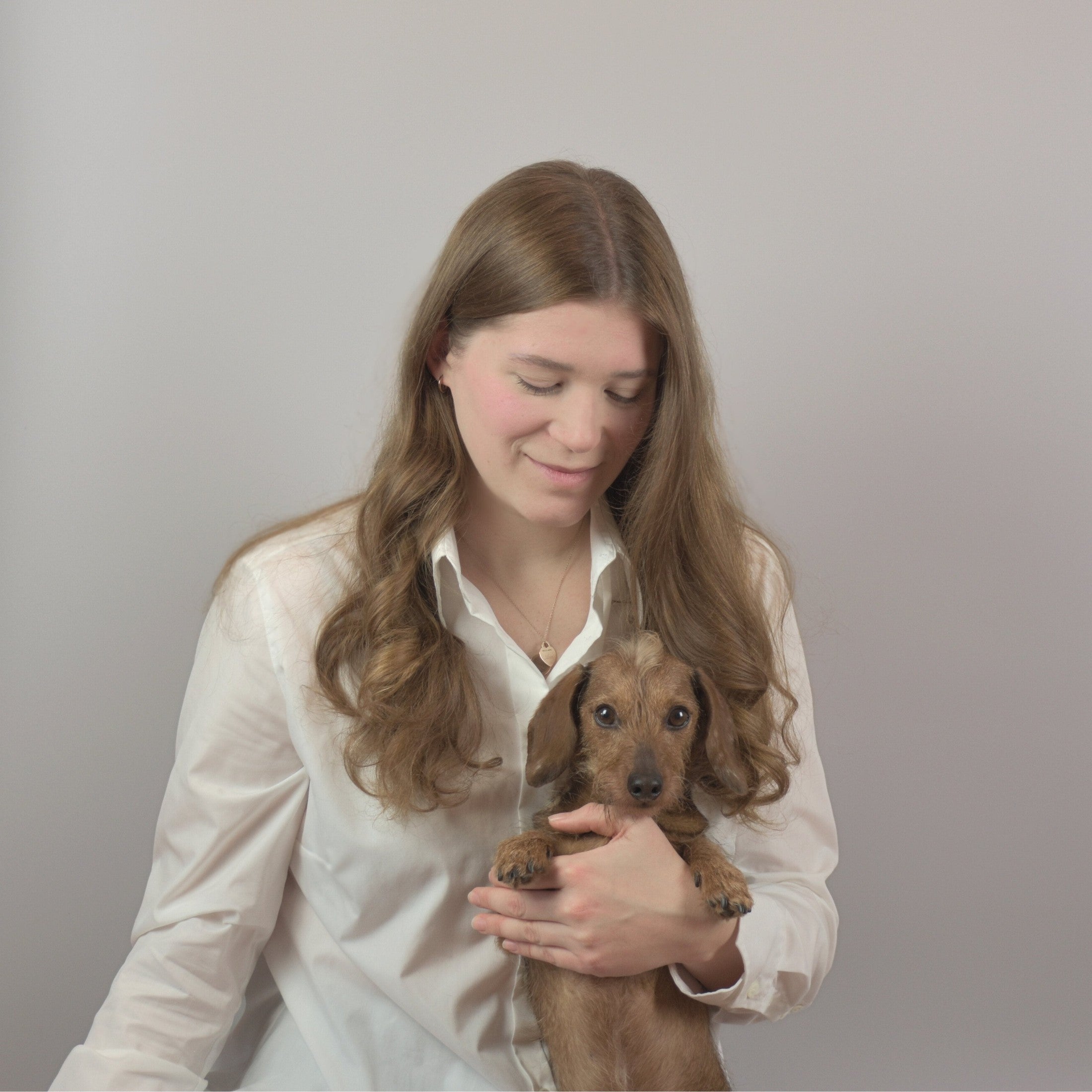

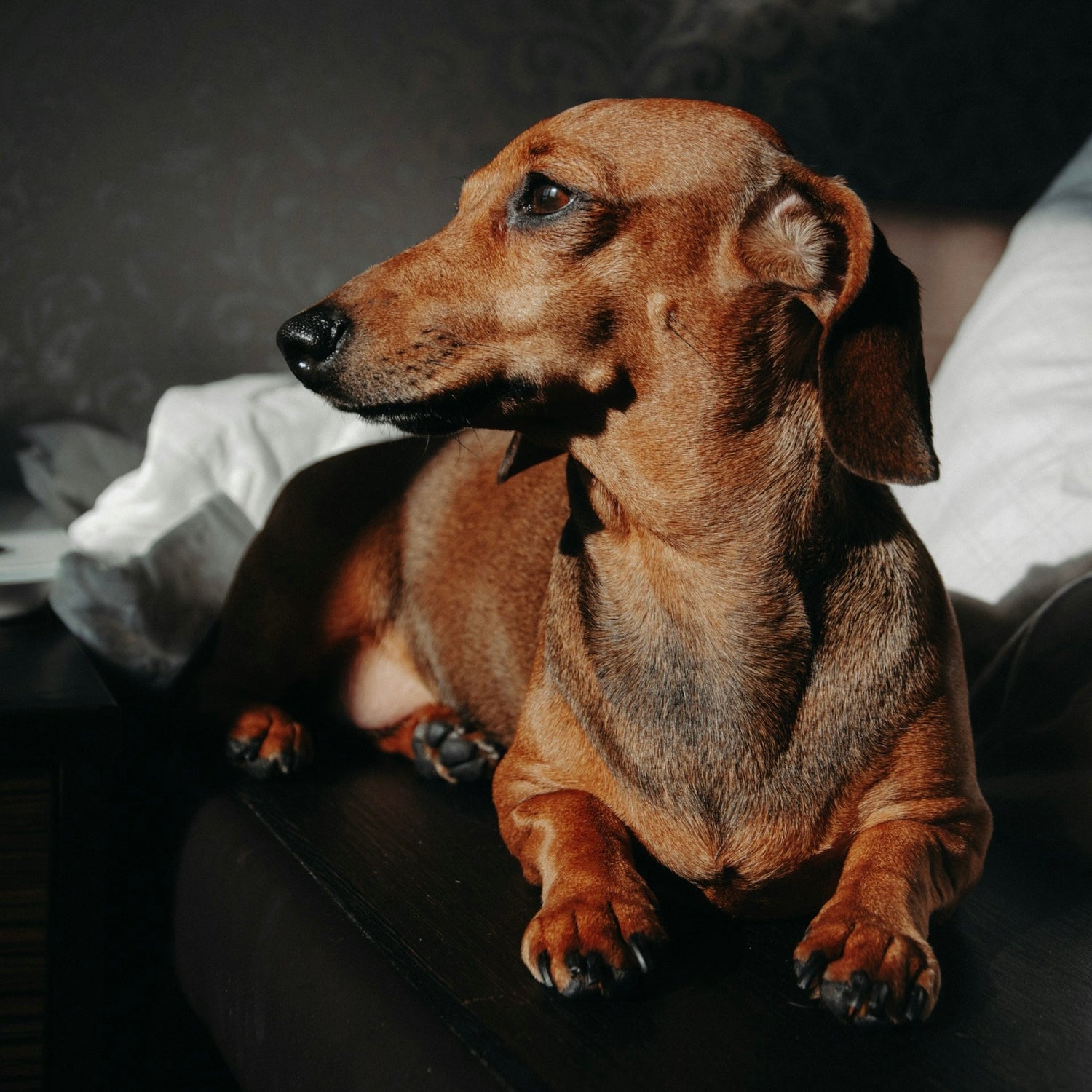
Founder’s Note by Ann & Schoko
A vacation in the south sounds like long evenings on the terrace, a first dip in the sea, and that special feeling of walking through still-empty streets with a coffee in the morning. With a dog, this idea doesn't fundamentally change – but it does require a different rhythm.
I enjoy traveling with my dachshund Schoko to places that feel like summer: Mallorca, Italy, the coasts of Southern France, or other destinations where life happens outdoors. It's precisely there that I've learned a successful vacation with a dog isn't measured by how many activities are on the daily schedule. Instead, it's about whether the dog can truly participate in the trip.
When the midday sun beats down on stone, sand, and asphalt, it's not the time for a "quick" walk through the old town or a hike you've been meaning to do. At that point, rest isn't a sacrifice, but good travel planning. For Schoko and me, that means starting earlier, choosing places more consciously, returning to our accommodation at midday, and not planning the day against the climate.
This guide shows you how a dog vacation in the heat can truly work: with an honest look at the strain on the dog, a clear strategy for warm countries with a dog, and practical decisions that turn a nice vacation into a safe and relaxed one.
Table of Contents
- Why a hot destination changes planning
- Which dogs should avoid hot countries
- Choosing hot countries with a dog: travel time, region, and accommodation
- Southern Europe with a dog: Our daily rhythm in Mallorca
- Traveling with a dog in the heat: arrival by car, plane, and ferry
- Beach, city, and hiking trails: The hidden heat traps on vacation
- The right accommodation for a dog vacation in the heat
- Packing list for hot countries with a dog
- Recognizing and dealing with heatstroke in dogs
- Conclusion: Why a summer vacation with a dog should be planned differently
- Frequently Asked Questions
The Essentials at a Glance
- A vacation in hot regions can work well for many dogs if travel time, daily routine, and accommodation are adjusted to the temperature.
- Air temperature alone isn't the only factor: direct sun, humidity, ground heat, exercise, lack of wind, and stress can significantly increase the strain.
- A dog shouldn't have to follow the same daily schedule as its humans during a summer vacation. Midday rest is part of a good vacation.
- Hot countries with a dog require a different choice of accommodation: air conditioning, shade, short distances, reliable water access, and a sensible emergency plan are more important than a nice pool.
- You should plan particularly carefully for short-nosed dogs, seniors, dogs with thick fur, respiratory or heart problems, and overweight dogs.
- If traveling to Southern Europe with a dog, parasite and mosquito protection should also be clarified individually with a veterinarian in addition to heat.
Why a hot destination changes planning
A dog doesn't experience heat the way we do. While we sweat and can at least partially adjust our daily lives to high temperatures, dogs primarily regulate their body temperature through panting. This costs energy, leads to fluid loss, and works less effectively the warmer and more humid the environment becomes.
For travel planning, this means a destination at 28 degrees can be pleasant for a dog – or overwhelming. It's not just the number in the weather app that matters. Direct sunlight, warm stone surfaces, sand, a long car ride, an unfamiliar environment, little shade, and activity all add up.
This is often underestimated, especially on vacation. You're motivated, you want to discover the first place, walk to the restaurant, or watch the sunset from a viewpoint. For us humans, such walks are usually part of the experience. For a dog, they can become a burden if they take place at the wrong time.
In Mallorca with Schoko, I very consciously learned to plan activities not by calendar time, but by temperature windows. The most beautiful walk was rarely the one that looked most spectacular at midday. It was the early walks by the sea, when the streets were still quiet, the air was still cool, and we weren't against the stream of other tourists.
The thought "We'll just walk a little slower" isn't enough in the heat. In warm weather, a dog needs not only a slower pace, but often a completely different daily concept.
Why the dog doesn't "just go along with it"
Many dogs initially show little obvious signs that something is too much for them. They keep going because they want to stay active, because they are following their human, or because the situation is exciting. Especially on vacation with new smells, other dogs, the beach, restaurants, and unfamiliar paths, this willingness can lead to warning signs being noticed late.
Therefore, it's worth relying not on endurance, but on observation. Panting is generally normal for a dog. It becomes noticeable if it doesn't subside even at rest, if the dog no longer wants to walk, constantly seeks shade, slows down, appears unusually restless, or suddenly no longer wants to make contact.
A good summer vacation with a dog is therefore not an active vacation with short breaks. It is a quieter, more intelligently planned vacation where beautiful moments take place during the cooler hours.
Which dogs should avoid hot countries
Not every dog should travel to warm countries in midsummer. This is not a restriction of the shared travel idea, but a responsible look at individual circumstances.
You should be particularly attentive with dogs that have breathing problems or belong to short-nosed breeds. Older dogs, very young dogs, overweight dogs, dogs with thick undercoats, and dogs with heart, circulatory, or respiratory diseases can also cope less well with heat. The same applies to dogs that already pant quickly in everyday life at moderate temperatures or appear visibly exhausted after short walks.
With Schoko, I pay special attention to his individual rhythm. A small dog is not automatically less sensitive to heat. Especially small dogs are closer to the heated ground, walk over hot sand or stone, and cannot simply escape to the next café with a few steps. Size does not replace good planning.
The most honest question before booking
The most important question is not: "Can my dog come along?" But rather: "Will my dog be able to enjoy this trip?"
A trip to Mallorca, Tuscany, Puglia, a Greek island, or the Côte d'Azur can be wonderful. But it has to suit the dog. A balanced, healthy dog that likes to rest, drinks well, and is relaxed when traveling can travel very well to warm regions with a well-thought-out daily routine. A dog that is already visibly burdened by warm weather at home does not need to prove that it can "keep up" abroad.
In some cases, a travel time in April, May, September, or October is the better choice. In other cases, a milder destination makes more sense. Brittany, the Atlantic coast of Portugal, northern Italy in the off-season, or regions at higher altitudes can then be the smarter alternative.
This is not a renunciation of special places. It is the decision for a vacation that feels good for everyone involved.
Choosing hot countries with a dog: travel time, region, and accommodation
A place can be dog-friendly and yet not the right choice for your dog in August. Therefore, when choosing hot countries with a dog, it's worth looking not first for the most beautiful beach or the trendiest accommodation, but for the most sensible travel period.
The best travel time, of course, depends on the destination, altitude, proximity to the coast, and personal travel style. As a basic idea, however, it applies: If you travel to Southern Europe with a dog, you gain a lot if you don't consider the hottest weeks as the only possible travel period.
Spring and autumn often offer exactly what makes a vacation with a dog particularly beautiful: more pleasant walking times, less crowded places, cooler nights, better restaurant availability, and more freedom for joint activities.
| Travel Type | Especially good travel time with dog | Why this time often works better |
|---|---|---|
| Balearic Islands and Mediterranean Islands | April to June and late September to October | Milder daily temperatures, less heat on stone and sand, better conditions for walks |
| Italian coastal regions | April, May, June and September and October | Cities, markets, and waterfront promenades are more relaxed outside of the high summer months |
| Greece and Croatian coast | May, June and September | More pleasant mornings and evenings, less pressure from very hot midday temperatures |
| Portuguese Atlantic coast | May to June and September | The Atlantic can provide air circulation and generally more balanced temperatures |
| Southern France | May, June and September | Good combination of outdoor life, gastronomy, and easier to plan daily routes |
Of course, a July or August vacation can also work. However, the trip then requires more structure. Accommodation without a cool retreat, a daily schedule with long walks, and a beach day without shade are not a good combination.
The four questions you should answer before booking
1. Is there a truly cool retreat in the accommodation?
Air conditioning is not a luxury detail when traveling to very warm regions. It allows the dog to recover after a walk or arrival. The key is not just whether the accommodation "has" air conditioning, but whether the room where your dog can sleep and rest reliably stays cool.
2. How close are the first quiet walking paths?
A nice hotel is of little use if the first suitable route only begins after 20 minutes over hot streets. Ideally, walking paths start directly at the hotel, on a shady coastal path, in a garden, in a pine forest, or on a quiet promenade.
3. Is there shade, not just a view?
Terraces, rooftops, and pool areas often look beautiful in pictures. For a dog, however, it is more important whether natural shade is available and whether it can retreat at any time.
4. Is the vacation good even without a schedule?
Good accommodation for hot days is a place where midday doesn't feel like wasted time. A shady courtyard, a quiet room, a small garden, a pleasant lobby, or a covered terrace make all the difference. Then the break becomes part of the vacation.
Southern Europe with a dog: Our daily rhythm in Mallorca
Mallorca is a good example for me of how differently a destination can feel depending on the time of day. In the morning, the island can be quiet, relaxed, and wonderful with a dog. Towards midday, many things change: streets heat up, bays fill up, parking lots get hot, and short walks suddenly feel much longer.
With Schoko, I therefore don't plan a fuller day, but a smarter one.
Start early: The most valuable time of the day
Our first walk starts as early as possible. Not because a dog necessarily has to get up particularly early in the morning, but because the island feels different then. Coastal paths are emptier, the air is fresher, restaurants are just setting up their terraces, and even popular places seem quieter.
For longer walks, small excursions, or a relaxed stroll by the water, these hours are ideal. The goal is not to cover as many kilometers as possible. It's about being outdoors together before the sun, heat, and crowds become too much.
Especially in Mallorca, I noticed that a nice morning walk often conveys more of a vacation feeling than a whole afternoon with too many stops. The paths are quieter, the dog can sniff without constantly having to dodge, and you yourself start the day without time pressure.
Midday rest is not a lost vacation day
Between late morning and afternoon, we consciously have a quiet period. This can be a long lunch in a shady, dog-friendly environment. More often, however, it means: back to the accommodation, refill water, check fur, close windows, use air conditioning or ventilation, and rest.
Especially for a dog, this break is not optional. It helps the body to regulate itself after arrival, exercise, and the many new impressions.
For us humans, this time can feel surprisingly good. You read, sleep, plan the evening, enjoy the accommodation, or simply take the pressure off of constantly having to be on the go. This slower middle of the day is one of the reasons why traveling with a dog in warm countries can be particularly beautiful: It forces us into a form of travel that is less hectic.
Evening hours: Quality instead of kilometers
When the temperature drops, the second part of the day begins. That's when restaurant visits, a walk through the old town, an aperitivo on a shady terrace, or a short walk to the sea are suitable.
On islands like Mallorca, it's worth not waiting until sunset to leave. A parking lot, a village, or a beach promenade can become significantly more crowded in the evening. Therefore, I prefer to plan a destination near the hotel or a route that we already know. This reduces stress and makes it easier to react to Schoko's mood.
The most beautiful evening walk doesn't have to be long. A quiet path, a view of the sea, a short stop on a bench in the shade, and the way back without haste are often completely sufficient.
Traveling with a dog in the heat: arrival by car, plane, and ferry
The journey is one of the most underestimated parts of a summer vacation. Especially in warm temperatures, the strain on the dog doesn't start at the destination, but often already when packing luggage, loading into the car, or during waiting times at the airport.
By car to warm countries
A car trip to Italy, Southern France, Croatia, or Spain can be wonderfully flexible. At the same time, the false assumption quickly arises that air conditioning alone solves all heat problems.
For a good summer trip with a dog, I plan driving times as much as possible for the early morning or evening. I avoid very long daily stages if the route leads through hot regions. An overnight stay can not only be more pleasant for us humans, but also give the dog real recovery.
Breaks should not only take place when the dog becomes restless. Plan them in advance and specifically look for shady spots. A rest stop with a small green strip in full sun is not automatically a good break. Sometimes a short detour to a park, a quiet side street, or a wooded area is the better decision.
It is also important: A parked car is not a retreat. Even in the shade, with the window open, or during a short stop, the situation can change very quickly. Modern climate functions or so-called dog modes can help in exceptional cases, but they do not replace supervision and safe planning.
By plane to warm countries
If a small dog can travel in the cabin, this is the more pleasant option for many travelers. Nevertheless, a cabin trip also requires a clever heat strategy.
Do not book flight times solely based on price or availability. A very early connection can be more pleasant than a departure in the late afternoon, when check-in, security control, boarding, and transfer to the hotel fall into the hottest hours.
At the airport, a reduced procedure helps. The dog does not need to experience much or be "exercised" before the flight. A short, quiet walk in front of the terminal, water, a well-ventilated transport area, and enough time without haste are more sensible than additional kilometers.
At the destination, the transfer should already be organized. Especially on islands, it is helpful to clarify in advance whether a rental car, private transfer, or taxi will safely transport the dog and whether the vehicle's air conditioning works reliably. The moment after landing is not ideal for looking for a spontaneous solution in the midday heat.
Ferry and island transfer
Those traveling to an island often encounter ferries or boat connections. Here, you should check in advance exactly where dogs are allowed during the crossing. Some providers allow dogs on deck or in designated areas, while others restrict their stay more strictly. Particularly important: The dog should not have to stay in the parked vehicle for extended periods.
Plan generous waiting times in the harbor. Asphalt surfaces, metal ramps, and lack of shade can heat up very strongly. Keep water ready, find a quiet shady spot early, and avoid unnecessary paths along the access road.
Beach, city, and hiking trails: The hidden heat traps on vacation
A beach holiday with a dog can be great. But the beach doesn't automatically mean cooling down. Hot sand, little shade, salt water, long walks over dunes or stone, and the constant excitement from other people can be very stressful.
A beach day with your dog needs a different pace
For a beach visit, the rule is: go early, come back early, or start in the late afternoon. The best time for people isn't automatically the best time for dogs.
Don't just choose a beach based on dog access. Also ask yourself: Is there natural shade? Can I easily refill water there? Is the walk from the parking lot short? Are the surfaces comfortable? Can my dog lie down without having to be in the sun?
Schoko doesn't need to play, swim, or learn new tricks for hours at the beach. A few minutes by the water, a quiet walk along the edge, sniffing in the damp sand, and then retreating into the shade are perfectly sufficient. Not every dog is a confident swimmer, and not every dog needs water activities to be happy.
After a stay by the sea, I rinse salt and sand from her fur, check her paws, and let Schoko dry in peace. That's just as much a part of a beach day as sunscreen and a towel for us humans.
City visits: Beautiful, but not at noon
Mediterranean old towns are often characterized by natural stone, narrow streets, and open squares. These places can be beautiful in the morning. At noon, they can become heat traps, especially if the alleys allow little air movement or the path leads over bright stone surfaces.
Therefore, plan city visits with your dog in small increments. A morning stroll through the old town, followed by coffee or breakfast on a shaded terrace and returning to the accommodation, is usually more sensible than a full day of activities.
Restaurants also require a realistic assessment. A terrace isn't automatically dog-friendly just because dogs are allowed. Check if there's shade, if there's enough space next to the table, and if your dog can relax there. A crowded spot in direct sunlight is not a good place for a long lunch break.
Hiking in the South: Elevation isn't the only factor
In Southern Europe, a hike with a dog should not only be judged by length and elevation. Stony paths, little shade, lack of water sources, and long journeys can make a seemingly short route challenging.
I plan hikes in the South differently than at home. A route that looks easy on the map can feel completely different in the sun and heat. Therefore, the start time, shade conditions, ground surface, water availability, and a realistic option to turn back are crucial.
For long routes, it's better to take too much water than too little. And don't set performance expectations beforehand. If the dog slows down, doesn't want to go further, or noticeably focuses on shade, the right moment to turn back isn't later, but immediately.
The right accommodation for a holiday with a dog in the heat
When traveling to warm countries, accommodation is not just a backdrop. It's the place where your dog can regulate, sleep, and feel safe.
| Criterion | Good solution for a holiday with a dog in the heat | Red Flag when booking |
|---|---|---|
| Cooling | Air-conditioned room or reliably cool indoor areas | Fan only, direct west-facing, heavily heated attic |
| Outdoor area | Shade from trees, canopy or courtyard | Terrace without shade, dark stone floor in full sun |
| Location | Short distances to quiet walking options | Long stretch over asphalt to the first green area |
| Water | Water source in the room, proximity to fresh water, possibility to refill | Water only on request or distant supply |
| Quiet | Retreat option without constant background noise | Constant pool music, direct location on a busy promenade |
| Dog rules | Clear rules for rooms, terraces and shared areas | Unclear or contradictory statements about dogs |
| Emergency | Veterinarian or animal clinic within reachable distance researchable | No information, remote location without transfer options |
A high-quality hotel is not automatically a heat-suitable accommodation for a dog. A beautiful pool area does not replace a shady spot. A large suite helps little if it heats up in the afternoon. Practical usability is crucial.
For me, booking also includes the question: Where will Schoko really be between 12 and 5 PM? If the answer is "probably outside somehow", the accommodation is not suitable.
Questions you should ask the hotel beforehand
Ask specifically, instead of relying on a "dogs welcome":
- Are dogs allowed in the air-conditioned room, even during cleaning by arrangement?
- Are there shaded outdoor areas where dogs are allowed to lie down?
- Are dogs allowed on breakfast or restaurant terraces?
- Is there a suitable walking option in the immediate vicinity that doesn't lead over hot streets?
- Is drinking water provided for dogs or can it be easily refilled at the hotel?
- Do the staff know of a veterinary practice or animal clinic in the area?
These questions do not seem demanding. They show that you travel responsibly.
Packing list for hot countries with a dog
For a summer holiday with a dog, you don't need excessive equipment. What's important are things that genuinely make everyday life easier and safer.
For on the go:
- light, sturdy travel bowl
- sufficient drinking water for arrival and excursions
- second water reserve in the car or daypack
- small towel for drying off after the sea or a water break
- paw care for dry or sensitive paw pads
- well-ventilated transport bag or travel crate
- leash that is secure in hand even when wet and sandy
- tick remover or tick card
- individual medications including a copy of the medication plan
For the accommodation:
- familiar blanket or travel bed
- replacement cover or second light blanket
- waterproof mat or small mat
- brush for sand, undercoat, and fur checks
- travel first-aid kit as recommended by a veterinarian
- contact details of your local veterinary practice and a veterinary practice at your holiday destination
For Mediterranean regions, individually tailored parasite and mosquito protection is also necessary. Seek veterinary advice on this in good time. Depending on the destination, duration of travel, and dog, different measures may be appropriate.
Recognizing and reacting to heatstroke in dogs
Heatstroke is a medical emergency. The sooner you react, the better.
Look for symptoms such as unusually strong or persistent panting, excessive drooling, restlessness, exhaustion, staggering, vomiting, diarrhea, noticeably red or pale mucous membranes, weakness, cramps, or changes in consciousness.
Don't wait for all symptoms to appear. Especially on holiday, it's easy to misinterpret a dog's behavior: "Maybe he's just tired from the journey," "He didn't sleep much today," or "He's stressed by all the new impressions." If heat could be a factor, it's better to act early.
Immediate measures in case of suspected overheating
-
Immediately move the dog out of the sun and heat into a cool, shaded or air-conditioned area.
-
Begin active cooling, for example, by applying water to the fur and skin in combination with air movement.
-
Do not wrap the dog in a wet towel. This can trap heat instead of reliably dissipating it.
-
Offer water if the dog is responsive, but do not force him to drink.
-
Contact a veterinary practice or animal clinic immediately and have the dog examined by a veterinarian – even if he seems to recover quickly.
When traveling to Southern Europe, I don't research the nearest animal clinic only in an emergency. The address, phone number, and route are saved on my phone and in my travel documents before departure.
Conclusion: A hot holiday with a dog needs a better plan, not less joy
Traveling with a dog in the heat doesn't mean you have to avoid beautiful countries, islands, or Mediterranean cities altogether. But it does mean you should approach your holiday differently.
For me, that's precisely part of calm travel with a dog: not clinging to a travel ideal that would be too strenuous for the dog. Instead, finding a routine where Schoko can truly be involved – with morning walks by the sea, long periods of rest in the cool, short evening strolls, and accommodation that not only looks good but also benefits both of us.
Those who travel to warm countries with a dog shouldn't ask how much program can fit into a day. Rather, which moments feel good for both dog and human. The early coffee on a quiet terrace. The first walk on cool sand. A shaded spot in the courtyard. An evening stroll when the streets become quieter again.
Southern Europe with a dog can be wonderful. Majorca, Italy, Southern France, Portugal, or the Croatian coast offer exactly this mix of landscape, enjoyment, and outdoor life that can make traveling with a dog so special. The key is not to ignore the heat. But to approach it with respect.
Then the summer holiday won't be smaller. It will be more conscious, calmer, and often even more beautiful.