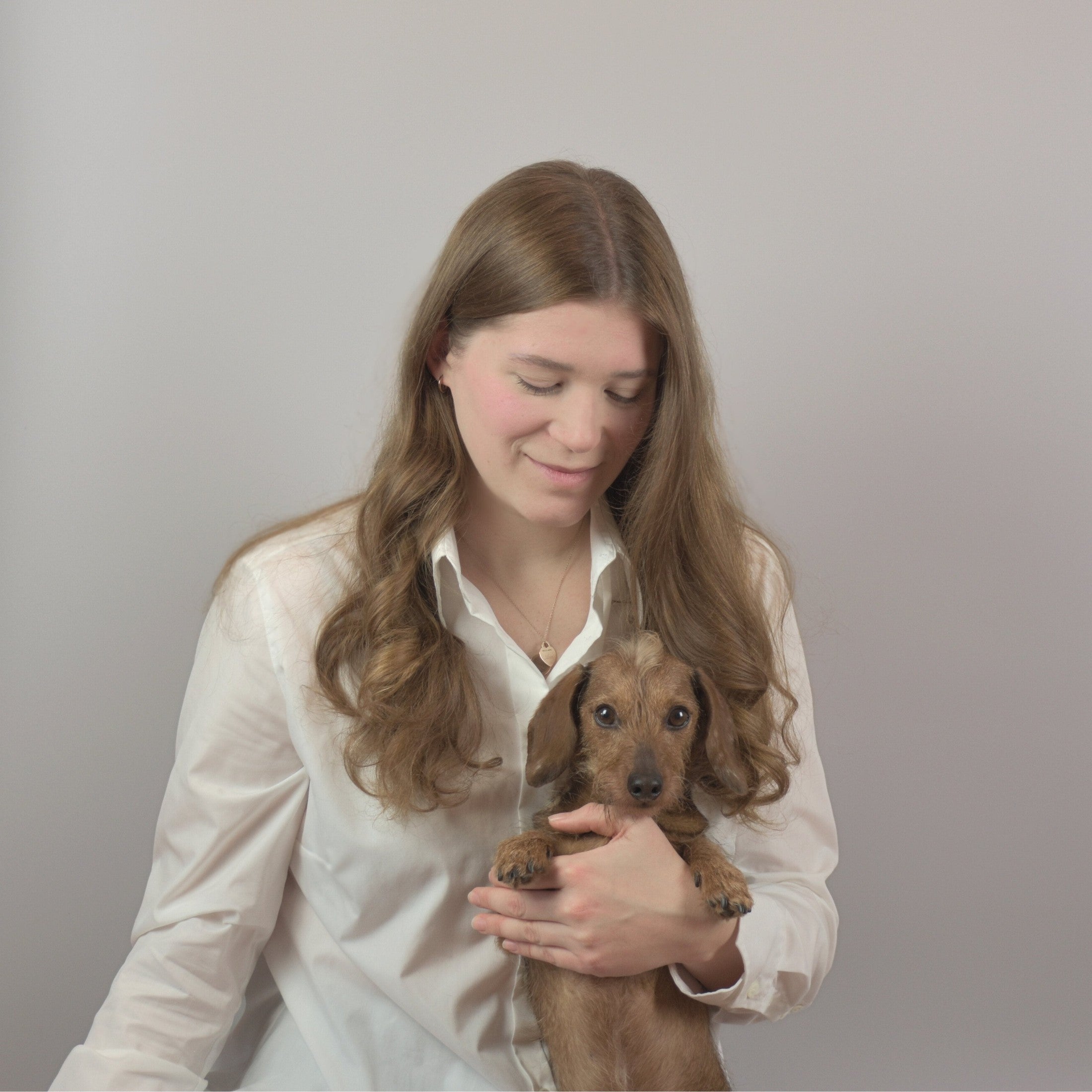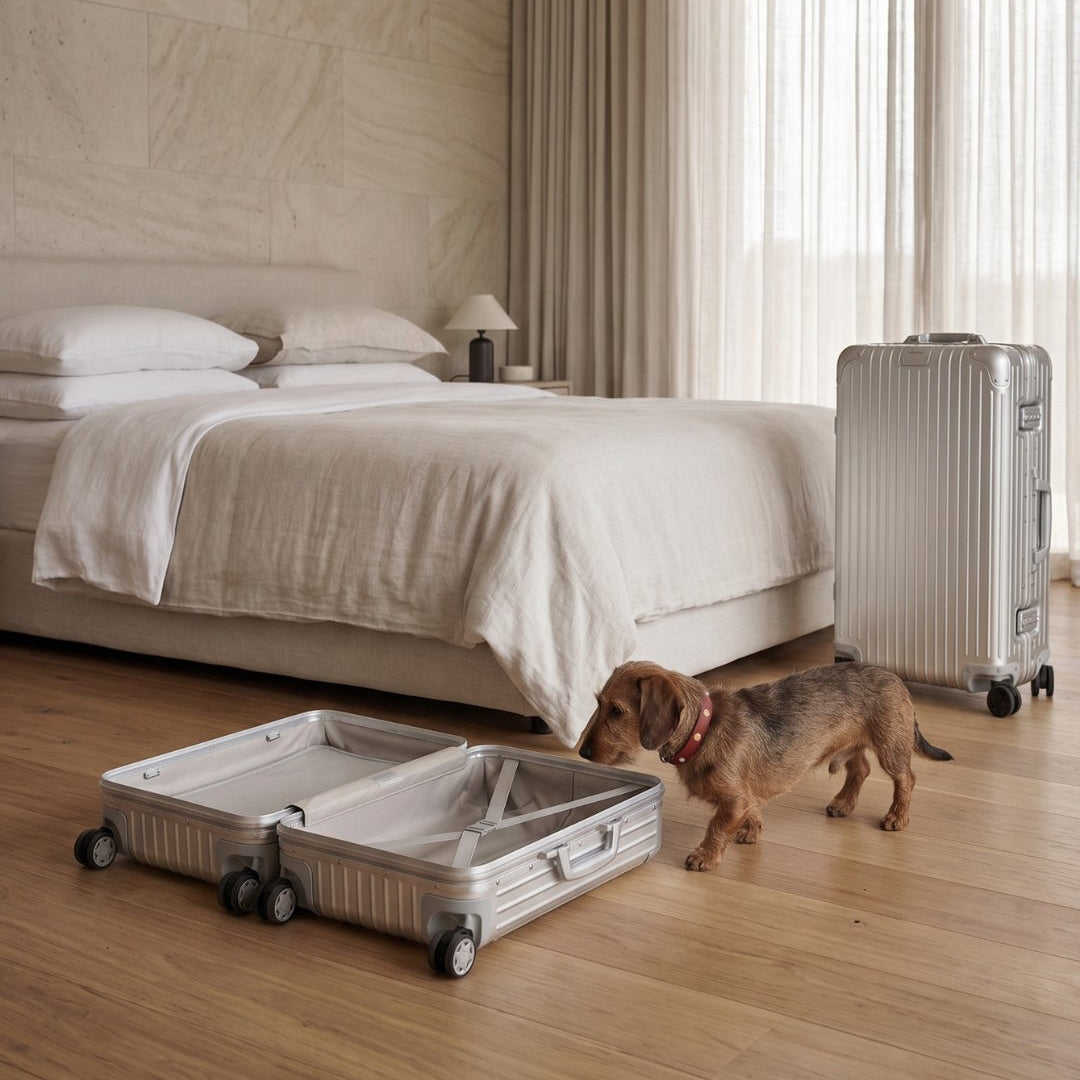

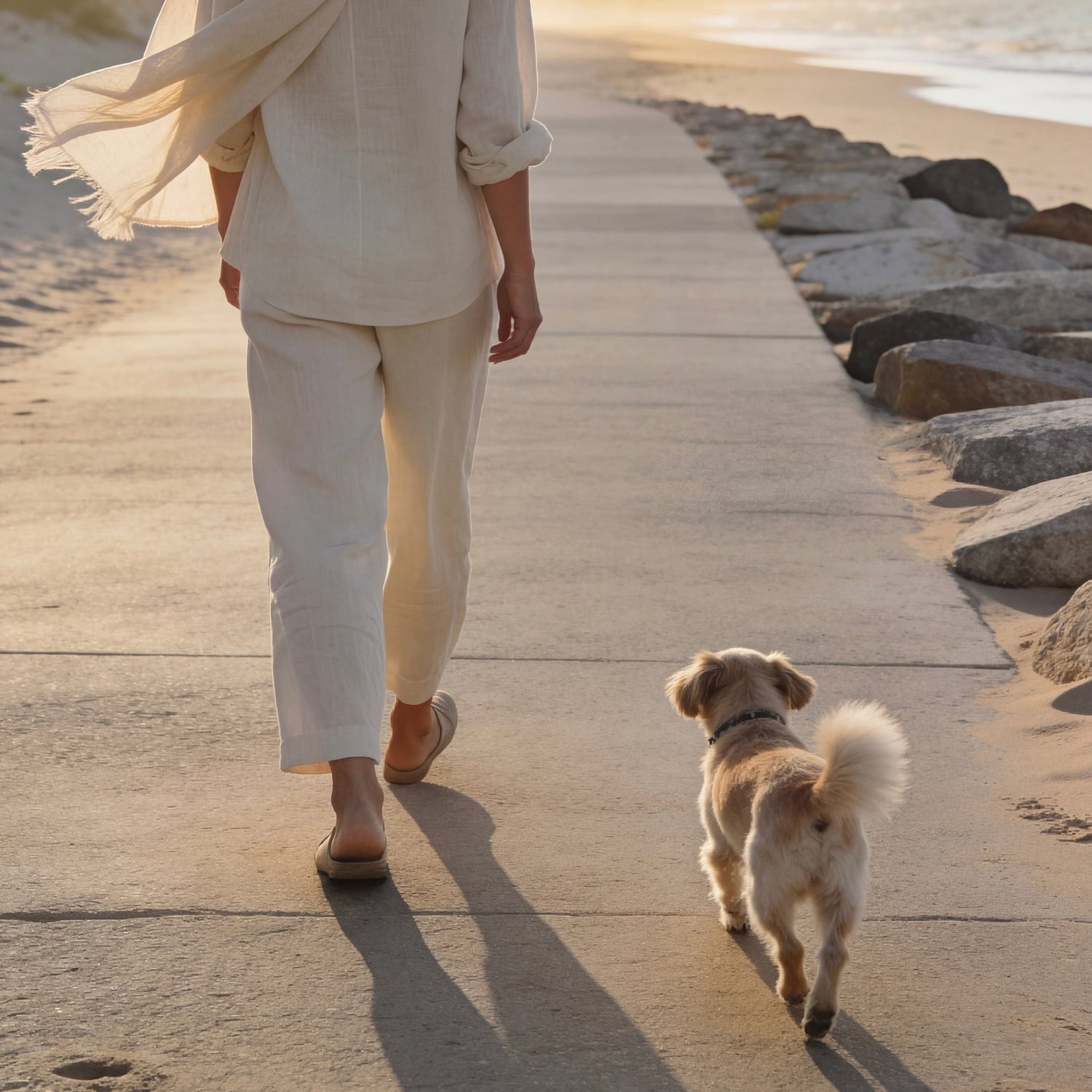
Some trips are captured in photos.
And there are journeys that change our view of time.
Slow travel with a dog belongs to the second category. Those who travel with their dog cannot force a pace. Walks become rituals. Places are experienced more intensely. Encounters arise organically. This is precisely where the quality of slow travel begins: in shared experiences.
Each book in our PAWLII Reading List was chosen because it explores a particular aspect of the concept of slow travel with a dog – literary, philosophical, or practical.
Table of contents
- Travels with Charley
- The Art of Travel
- Great Escapes (Germany)
- The Stylish Life: Dogs
- A Dog Named Beautiful
- Have Dog, Will Travel
- Fifty Places to Travel with Your Dog Before You Die
- Slow Travel: The Art of Travel
- Holidays with your dog: 50 dream destinations
- Traveling with Dogs.
- Conclusion: Slow travel with a dog as a way of life
- Frequently Asked Questions
Key take-aways
- Slow travel with a dog is an attitude, not a travel itinerary – quality beats speed.
- The selected books combine literature, philosophy, design, and practical knowledge.
- Slowing down is achieved through conscious choice of location, longer stays, and careful planning.
- International inspiration and structured preparation are not mutually exclusive.
- Reading is the first step – slow travel with a dog begins in your mind, not at the airport.
Travels with Charley - John Steinbeck
In the early 1960s, Steinbeck embarked on a journey across the USA with his poodle, Charley. What makes this book so special is not the route – but the perspective. Charley is not a decorative companion. He is a catalyst for conversations, a door opener for encounters, and at the same time a mirror for Steinbeck's own reflections.
This work is almost archetypal for the concept of slow travel with a dog. The journey doesn't follow any tourist master plan. It's open, responding to moods, conversations by the roadside, and small everyday observations. The dog forces breaks – and these very breaks become literary space.
What makes this book unique is the quiet intimacy between humans and dogs. It shows that traveling with a dog is not a limitation, but a form of grounding. Slow travel with a dog here means: less distance, more depth.
The Art of Travel - Alain de Botton
At first glance, this book isn't about dogs. And yet, it's essential for anyone who truly wants to understand slow travel with a dog. De Botton analyzes why we travel, what expectations we project onto places, and why we're often disappointed.
What makes this work unique is its philosophical depth. It exposes the illusion that a change of location automatically brings about inner change. This insight is particularly relevant for traveling with a dog: anyone who travels with a dog quickly learns that perfection is not a prerequisite for a good trip.
The essence of slow travel with a dog lies in one's inner attitude: flexibility, serenity, and the ability to embrace the moment – even when plans change. De Botton provides the intellectual foundation for a more relaxed form of travel that doesn't depend on external glamour.
Great Escapes (Germany). The Hotel Book - Angelika Taschen
This book series is less a travel guide than a curatorial statement. Angelika Taschen brings together architecturally exceptional hotels – places with character, history, and a clear design signature.
Why was it included in this reading list? Because slow travel with a dog is significantly influenced by the quality of the accommodation. A harmonious environment reduces stress. Room design, materials, lighting – all of these have a direct impact on both people and dogs.
What's unique here is the visual power. The photographs convey atmosphere. You can practically feel the tranquility of modern country houses or the clarity of minimalist architecture. The essence of slow travel with a dog: quality of stay isn't a luxury – it's the foundation for slowing down.
The Stylish Life: Dogs - Assouline
This coffee-table book portrays dogs as an integral part of a stylish lifestyle. International personalities, iconic four-legged friends, elegant imagery – without kitsch, without exaggeration.
This book is important for the concept of slow travel with a dog because it doesn't view the dog in purely functional terms. The dog isn't a travel problem to be solved; it's part of the lifestyle.
What makes this work unique is its visual elegance. It combines dog ownership with culture, design, and fashion. The core idea: Slow travel with a dog means that your lifestyle doesn't change at the hotel door. Your dog is an integral part of it – even in design-oriented environments.
A Dog Named Beautiful - Rob Kugler
Rob Kugler learns that his dog Bella is seriously ill – and decides to travel the world with her. What follows is not a glamorous travel story, but a deeply personal tale about time, loss, and priorities.
Why was this book chosen? Because it makes visible the emotional core of slow travel with a dog: time is limited. And time spent consciously is more valuable than any destination.
What makes him unique is his honesty. Kugler doesn't romanticize anything. He shows the challenges, the uncertainties, the improvisation. The core message: Slow travel with a dog isn't about perfect planning – it's about conscious presence.
Have Dog, Will Travel - Stephen Kuusisto
Stephen Kuusisto is blind. His assistance dog is his partner in everyday life – and when traveling. This book is less classic travel literature than an essay about mobility, trust, and autonomy.
What makes it unique is the perspective. Here, travel becomes a collaboration between human and dog. Every step is deliberate. Every movement is communication.
For slow travel with a dog, this is a profound lesson: slowness is not a weakness. It is precision. Those who travel more slowly perceive more.
Fifty Places to Travel with your Dog, before you Die - Chris Santella
This book is more than a list of destinations. It's a curated invitation to rethink traveling with a dog – international, high-quality, and consciously chosen.
Chris Santella gathers places where dogs are not only allowed, but welcome. And therein lies the quality of this work: it's not about pragmatic solutions, but about genuine travel experiences. Luxurious ranches in Montana. Stylish inns in New England. Coastal landscapes in Italy. Vast wilderness in Canada.
What makes this book unique is its narrative structure. Each destination is conveyed through stories – about hosts, about atmosphere, about details. You understand why a place works. Why it slows you down. Why it allows space.
In the context of slow travel with a dog, this work demonstrates that cosmopolitanism and deceleration are not mutually exclusive. One can travel internationally and still remain mindful. The choice of location is crucial, not the distance.
For your readers, this book offers primarily high-level inspiration: not "where can my dog come along?", but "where does shared quality arise?"
Slow Travel: The Art of Travel - Dan Kieran
Dan Kieran poses a radical but liberating question: What happens when we no longer view speed as progress?
This book is the theoretical backbone of the slow travel movement. Kieran describes how much our perception of places suffers under the pressure of speed. Airplanes, high-speed trains, tightly scheduled programs – they compress experiences.
What makes this book so valuable for the concept of slow travel with a dog? It explains why traveling with a dog almost automatically slows things down. Dogs don't accept artificial acceleration. They orient themselves to the rhythm of their surroundings, to smells, to pauses, to repetition.
Kieran's perspective on the "in-between" is unique. It's not the destination that counts – but the journey. The route. The changing landscape.
For travelers, this means:
- Maybe not three cities in five days.
- But a house by the lake for two weeks.
- A recurring walking route.
- A familiar café.
This book provides the intellectual justification for traveling more slowly – without having to justify oneself.
Holidays with your dog: 50 dream destinations you absolutely must visit with your four-legged friend - Julia Friedrich
This book brings structure to inspiration. It offers 50 specific travel destinations with a dog – clearly described, geographically diverse, and presented in a practical way.
What makes it special is the combination of emotion and orientation. It's not just about "dog-friendliness," but about landscapes, opportunities, and seasonal features. Coastal towns, mountain regions, cities with green spaces.
In the context of slow travel with a dog, planning is not at odds with spontaneity. It's a prerequisite for relaxation. Those who know where there are off-leash areas, which hotels are truly dog-friendly, and which regions offer ample space travel more peacefully. They don't have to improvise – they can make conscious decisions.
Traveling with Dogs.
International travel with a dog requires more than good intentions. Vaccination requirements, transport regulations, entry requirements – these are the invisible layer of every trip planning.
What makes this book valuable is its bilingual, internationally oriented structure. It creates security through clarity. And that's precisely what's crucial for slow travel with a dog . Because true deceleration doesn't come from naivety – but from preparation. Knowing that formalities are taken care of allows you to truly relax and unwind on location.
What makes this work unique is its objective, structured approach. It's less emotional – and precisely for that reason so important. It forms the foundation for stress-free travel.
Conclusion: Slow travel with a dog is an attitude – not a travel route
When you place these ten books side by side, you don't get a simple travel guide. You get a new travel experience. Together they paint a clear picture: Slow travel with a dog does not mean deprivation.
It means choice.
- Selection of locations
- Selection of the length of stay
- Accommodation selection
- Choosing the pace
In a world that sells speed as efficiency, slowness becomes a luxury. And anyone who travels with a dog quickly realizes: acceleration is often artificial. The dog lives in the moment. He doesn't judge a place by prestige. He measures quality by smell, space, and atmosphere. Perhaps that's precisely the essence of slow travel with a dog: to approximate this natural rhythm. Not having to see everything. Not having to have been everywhere.
But to truly be where you are right now. Don't read these books as preparation for a trip. Read them as an invitation to redefine your understanding of travel. Because slow travel with a dog doesn't begin with a booking. It begins with a decision.