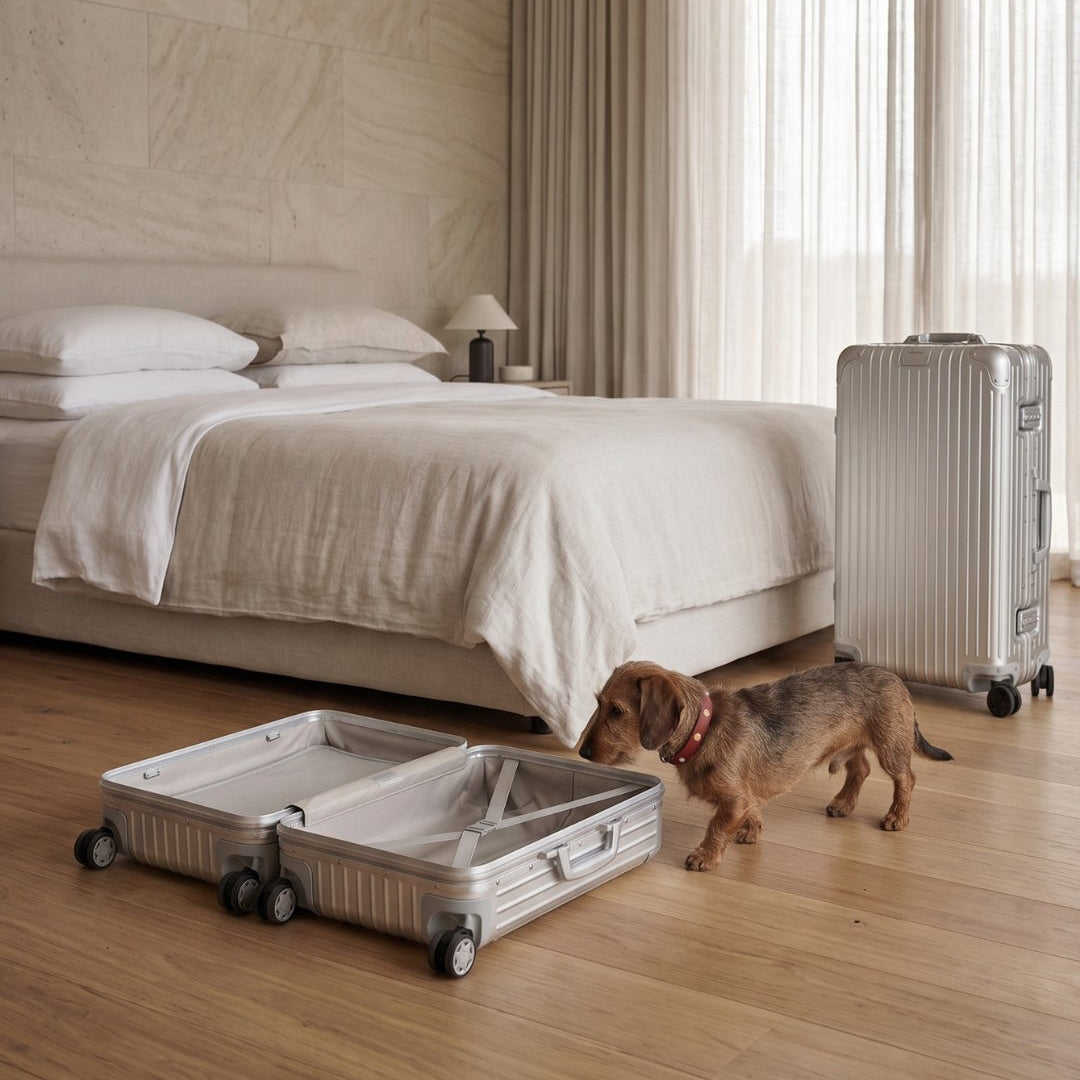


Traveling with your dog means spending quality time together, experiencing new things, and creating lasting memories. At the same time, every trip brings with it a special responsibility – and one of the most important aspects concerns your dog's nutrition . While transport, accommodation, and activities are usually planned well in advance, dog food is often underestimated during vacations. Yet, food plays a crucial role in how stress-free, energetic, and healthy your dog's journey will be.
Unfamiliar daily routines, new environments, changes in climate, and unfamiliar smells can put a strain on the gastrointestinal tract . A stable, familiar diet is therefore one of the most important factors for relaxed travel. This comprehensive guide shows you how to organize your dog's nutrition cleverly, safely, and travel-friendly without compromising on quality. You'll learn which feeding method is best suited to your travel situation, how to transport food safely, what's important regarding storage and hygiene, and how to avoid digestive problems on vacation from the start.
Table of contents
- Dog food on vacation: Why nutrition is so important when traveling
- Feeding methods while on vacation: Dry, wet & raw feeding in direct comparison
- Transporting dog food: How to safely travel dry, wet and raw food
- Storing dog food on vacation: hygiene, shelf life & safe storage
- Buying dog food abroad: sources, brand differences & emergency plans
- Avoid changing your pet's food while on vacation: Here's how to keep dry, wet, and raw food consistently well-tolerated.
- Dog food for special needs while on holiday: dogs with allergies, puppies, senior dogs & sensitive dogs
- Conclusion: Managing dog food on vacation with ease – for a smooth trip
Key take-aways
-
Bring your dog's usual food with you to avoid digestive problems during the journey.
-
Choose a feeding method that suits the travel form – dry food and dry BARF are particularly suitable for travel.
-
Ensure correct storage : airtight, cool and hygienically protected.
-
Check in advance whether you can buy dog food at your holiday destination – premium brands are not available everywhere.
-
Always plan for a small emergency ration in case excursions take longer or transport is delayed.
Dog food on vacation: Why nutrition is so important when traveling
Many dogs find travel exciting, but also challenging. New impressions, unfamiliar noises, a different daily routine, or an unusual climate can affect their digestion. A consistent feeding plan is therefore essential for a relaxed journey.
High-quality feed supports:
-
a stable digestive system
-
a strong immune system,
-
sufficient energy for excursions,
-
balanced behavior,
-
a peaceful sleep.
Especially in warm regions, in mountainous areas, or during long journeys, dogs are more sensitive than at home. The availability of certain brands may also be limited abroad. Those who value high-quality nutrition should therefore plan ahead and know exactly which type of food is best suited for the upcoming trip.
Feeding methods while on vacation: Dry, wet & raw feeding in direct comparison
When traveling, not only the quality of the food matters, but also its handling. The new classification distinguishes between dry , wet, and raw food – each with subcategories that have specific advantages and disadvantages.
Feeding methods during holidays compared
| Feeding method | Subcategories | Advantages | Disadvantages | Durability on the go | storage | Ideal for |
|---|---|---|---|---|---|---|
| Dry | Dry food, dry BARF | lightweight, compact, no refrigerator needed, very travel-friendly | Less moisture, not every dog likes it, possibly too high in protein | 6–12 months | airtight, cool & dry | Flights, tours, hotels |
| Wet | Cans/sachets, homemade & vacuum-packed | High acceptance, soft, good for sensitive dogs | heavier, requires refrigeration after opening, more waste | Canned food lasts 1–2 years, freshly cooked food 1–3 days | Cans unrefrigerated; freshly chilled | Car, camper, holiday home |
| Raw feeding | BARF, frozen fresh meals | natural, very high quality | strict refrigeration, difficult to travel with | Keep refrigerated for 1-2 days, keep frozen for longer | Freezer/Cooler | Holiday homes, campers with TK |
This classification provides clarity and helps you choose the feeding method that best suits your travel scenario.
Transporting dog food: How to safely travel dry, wet and raw food
The transport of dog food depends largely on the chosen feeding method and the type of travel. For quality-conscious dog owners who value a stable diet even while traveling, it is worthwhile to consider dry, wet, and raw feeding options separately.
Dry: Dry food & dry BARF
Dry food is considered the most convenient option for travel. It's lightweight, space-saving, and requires no refrigeration. It proves to be a particularly reliable choice for air travel or tours with multiple accommodations. Dry BARF (Biologically Appropriate Raw Food) is an interesting alternative for those who prefer a natural feeding approach but lack refrigeration: it's extremely lightweight, concentrated, and can be rehydrated with water.
It is recommended to transfer dry food into airtight travel containers to preserve aroma, freshness, and hygienic cleanliness. Heat, humidity, and sand – especially in southern regions – can otherwise affect the contents.
Wet: Ready meals & home-cooked rations (vacuum-packed)
Wet food is particularly suitable for dogs that eat less while on vacation or are sensitive to less textured food. Cans and sachets are flavorful, but heavier and take up more space. Those who cook fresh meals can vacuum-seal them and store them in the refrigerator for several days – ideal for accommodations with a minibar, vacation rentals, or campers.
Transporting cans by car or campervan is straightforward, but they quickly add to your luggage on planes and trains. For safe storage, an electric cooler is recommended, or you can politely ask hotels for additional cooling capacity.
Raw feeding: BARF and frozen fresh meals
BARF requires continuous refrigeration. This is easily manageable for vacation homes or campers with a freezer compartment. The challenge lies in transportation: meat thaws quickly and can become inedible after just a few hours. Raw feeding is hardly feasible for air travel or multi-day train journeys.
High-quality, leak-proof packaging is essential, as is carrying small, individual portions that thaw faster and are more hygienic to handle. For longer trips, dehydrated BARF is a good option as a temporary solution.
Storing dog food on vacation: hygiene, shelf life & safe storage
Proper storage determines how fresh and nutritious the food remains. High-quality products are sensitive to heat, air, and humidity – an issue often underestimated when traveling.
Important instructions:
-
Always store dry food in an airtight container.
-
Never leave dog food out in the open in a hotel room.
-
Refrigerate cans immediately after opening.
-
Store home-cooked food and BARF (Biologically Appropriate Raw Food) exclusively in a refrigerator.
-
Do not store treat bags in direct sunlight or in warm car trunks.
-
Transport snacks in sealable bags.
Many accommodations are flexible when it comes to cooling pet food – a brief mention is often enough.
Buying dog food abroad: sources, brand differences & emergency plans
The selection of dog food can vary greatly abroad. Many premium brands are unavailable or differ in recipe or quality. Therefore, thorough preparation is worthwhile.
You can find dog food mainly in:
-
larger supermarkets
-
Pet shops
-
Pharmacies (especially in Mediterranean countries)
-
local veterinary practices
-
international online shops (e.g. EU-wide platforms)
If food becomes unexpectedly scarce, rely on:
-
stomach-friendly transitional food (cooked chicken & rice),
-
Dry BARF or high-quality snacks as an interim solution,
-
Small, frequent portions instead of large meals.
Do not experiment with new types of feed – especially in regions where meat quality or hygiene standards vary greatly.
Avoid changing your food while on vacation: How to keep dry, wet, and raw food tolerable
A stable digestive system is essential for a relaxing trip. Therefore, you should avoid changing your pet's diet during your vacation.
Dry: Dry food & dry BARF
Dry food offers the highest stability, as its quality and composition remain consistent. Be sure to take the same type and brand your dog is used to. If you're considering dry BARF (Biologically Appropriate Raw Food), test it before your trip to ensure your dog tolerates it. Any switch to dry food should be made no earlier than two weeks before your trip.
Wet: Ready meals & home-cooked rations
Wet food recipes often differ more than dry food. Cans or sachets should never be replaced spontaneously while on vacation. Home-cooked meals are particularly suitable for sensitive dogs, provided you use the exact same ingredients as at home.
Raw feeding: BARF & frozen fresh meals
Raw feeding requires absolute stability, as the gut is sensitive to raw meat. Do not switch to unfamiliar meat varieties when abroad. If you cannot transport BARF safely, pre-tested, dried BARF is usually the better option as a temporary solution.
Universal tips for all feeding methods
-
Maintain consistent feeding times
-
Do not introduce any new snacks or treats.
-
Small portions when stressed
-
Offer plenty of fresh water
-
Bring probiotics or stomach-friendly supplements.
Dog food for special needs while on holiday: dogs with allergies, puppies, senior dogs & sensitive dogs
Special dietary requirements require special planning:
-
For allergy sufferers: Pack sufficient quantities of special food, translate ingredient lists, and carry an emergency kit.
-
Puppies: several small meals, consistent routine.
-
Seniors: softer consistencies or more liquid are preferred; be mindful of sensitive stomachs.
-
Sensitive dogs: no experiments, only familiar food, plenty of peace and quiet during feeding.
With careful planning, your dog can travel relaxed – regardless of age or health conditions.
Conclusion: Managing dog food on vacation with ease – for a smooth trip
A stable, high-quality diet is a key factor for relaxed travel with your dog. With good preparation, proper transport, secure storage, and a clear routine, you can avoid stressful situations and promote your dog's well-being. Whether dry, wet, or raw food – any type can work on vacation if carefully tailored to the travel conditions.